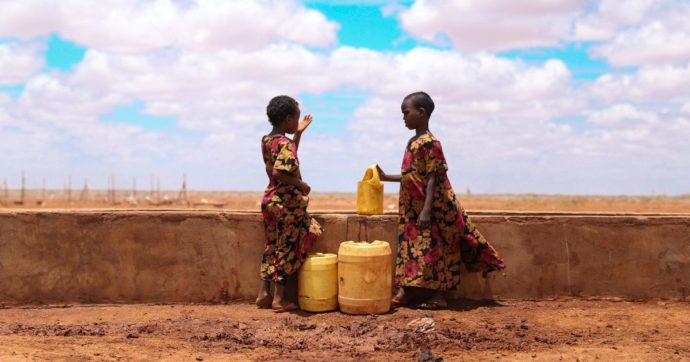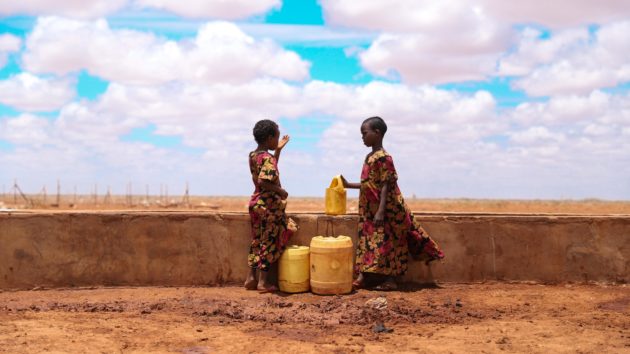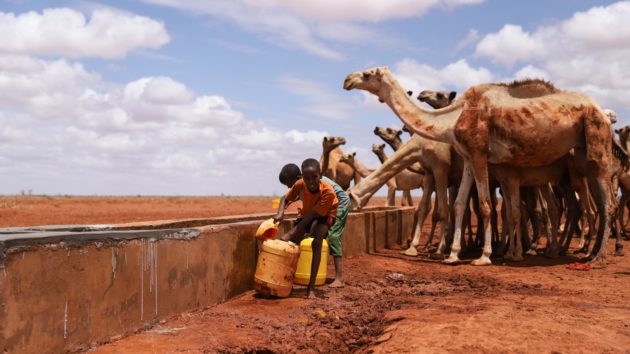
Il report Save the children: i neonati saranno colpiti anche 2,6 volte in più dalla siccità, 2,8 volte in più dalle inondazioni dei fiumi, quasi 3 volte in più dalla perdita dei raccolti agricoli, con punte di 10 volte in più come in Mali, e dal doppio degli incendi devastanti
In base agli attuali impegni presi dai Paesi del mondo per contenere l’innalzamento della temperatura globale, i bambini nati nel 2020 saranno esposti alle ondate di calore eccessivo in media sette volte di più rispetto ai loro nonni, con punte di 18 volte in più se si considera ad esempio il solo Afghanistan. Ma i neonati di oggi saranno colpiti anche 2,6 volte in più dalla siccità, 2,8 volte in più dalle inondazioni dei fiumi, quasi 3 volte in più dalla perdita dei raccolti agricoli, con punte di 10 volte in più come in Mali, e dal doppio degli incendi devastanti. Questo l’allarme lanciato da Save the Children, nel rapporto “Nati in crisi climatica: Perché dobbiamo agire subito per proteggere i diritti dei bambini”, pubblicato nel giorno di apertura del meeting internazionale Youth4Climate: Driving Ambition a Milano e che sarà seguito dalla PRE-COP26, in preparazione del Summit Onu sulla crisi climatica COP26 che si terrà in Scozia il prossimo novembre. L’indagine, realizzata in collaborazione con un team internazionale di ricercatori sul clima guidati dalla Vrije Universiteit Brussel (VUB), e rilanciato dalla prestigiosa rivista Science, mette in evidenza l’aumento netto dell’esposizione a una serie di eventi estremi legati al clima dei bambini nati nel 2020 rispetto a quelli nati nel 1960. “La crisi climatica è di fatto una crisi dei diritti dei bambini – ha dichiarato Inger Ashing, ceo di Save the Children International – e l’azione sul cambiamento climatico non è solo un obbligo morale, ma anche un obbligo legale per i governi di agire nel migliore interesse dei bambini”.
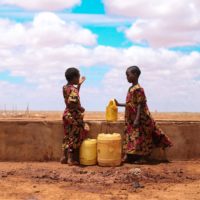
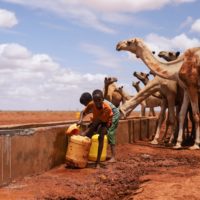
CHI PAGHERÀ IL CAMBIAMENTO CLIMATICO – Come sottolinea il rapporto, anche se l’86% delle emissioni globali di CO2 è responsabilità dei paesi più ricchi, i bambini che vivono in quelli a basso e medio reddito e nelle comunità più svantaggiate saranno colpiti prima e più pesantemente, perché sono già i più esposti alle malattie trasmesse dall’acqua, alla fame e alla malnutrizione, e vivono in alcuni casi in abitazioni precarie o più fragili e vulnerabili in caso di inondazioni, cicloni e altri eventi climatici estremi. “Per i bambini più vulnerabili – scrivono gli autori – gli impatti del cambiamento climatico possono interrompere l’accesso all’assistenza sanitaria e all’istruzione, come nel caso delle bambine penalizzate dalle disuguaglianze di genere, delle popolazioni sfollate o rifugiate, dei bambini disabili e delle popolazioni indigene”. In Pakistan, ad esempio, dopo le inondazioni del 2010 aggravate dal cambiamento climatico, il 24% delle bambine al sesto anno di studi ha abbandonato la scuola rispetto al 6% dei bambini. “E se è improbabile che i bambini del Nord America e dell’Europa Occidentale soffrano di un aumento nella perdita dei raccolti – racconta il report – quelli dell’Africa subsahariana dovranno affrontare 2,6 volte più perdite nei raccolti rispetto ai loro coetanei, e i bambini del Medio Oriente e del Nord Africa fino a 4,4 volte di più. Alcuni di loro corrono il rischio di subire questi disastri simultaneamente o in rapida successione, con l’effetto indiretto di rimanere intrappolati in un circuito di povertà a lungo termine e di annullare decenni di progressi nella lotta contro la fame e contro le sue conseguenze come l’arresto della crescita che compromette la loro salute”.
1 / 13
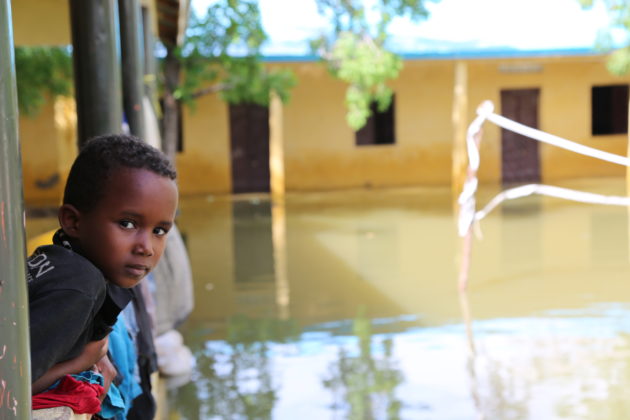
A boy looks out at the flooded street.
2 / 13
CH1356797
Deko* and Sadia* 's family lived a nomadic pastoralist life before they were displaced and came to the village because of drought. They had a lot of animals (Her mother Anab doesn’t know exactly how many but they used to have goats, sheep and camels) and in a drought in 2018 she lost all but 20 goats and sheep.
Deko takes care of the goats and runs a lot to herd them. Sometimes she eats the fruits that grow in the pastures. She is described by her sister Amina* as a playful child who likes building miniature Somali traditional houses. Her best friend is Rahma* her older sister.
She likes eating injera (Somali pancake). In a day she’ll eat injera for breakfast, rice for lunch and spaghetti for dinner. She also likes somali tea, dates and juice. She likes to play football. In the future she wants to be a big girl.
When they first came to the village they couldn’t get food. They are in debt and can’t get credit – they used to get loans from the market to buy food and re-payed them in high season when they took the animals to market.
Save the Children provided Deko's mother Anab with a sack of rice, beans, wheat flour, cooking oil and milk at the beginning of July. Before, they were only able to have two meals per day. Now, since Save the Children has helped them, they have three meals a day. She says this is important as if you get weak here, other things can happen to you.
Anab says that daily life in the village is different to that in the countryside. Getting water is very expensive and to transport it you have to rent a car. Before she would use the camels to transport the water. Also there are no health facilities here, so if a child gets sick they have to go to the nearest town of Gardo. Also there are no toilets.
She hopes for a better future and to build a school and health facilities here. Her children don’t currently go to school but they go to the madrasa since they lived here.
Anab gets sad when she sees her children sick and she doe
3 / 13
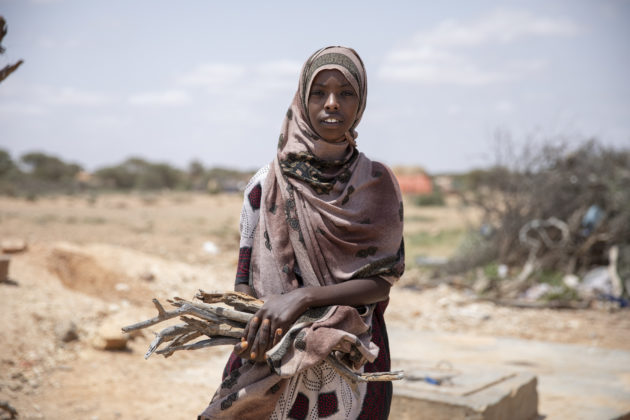
CH1356826
Amina*'s family lived a nomadic pastoralist life before they were displaced and came to the village because of drought. They had a lot of animals (Her mother Anab doesn’t know exactly how many but they used to have goats, sheep and camels) and in a drought in 2018 she lost all but 20 goats and sheep.
When they first came to the village they couldn’t get food. They are in debt and can’t get credit – they used to get loans from the market to buy food and re-payed them in high season when they took the animals to market.
Save the Children provided Amina* and Deko*'s mother Anab with a sack of rice, beans, wheat flour, cooking oil and milk at the beginning of July. Before, they were only able to have two meals per day. Now, since Save the Children has helped them, they have three meals a day. She says this is important as if you get weak here, other things can happen to you.
Anab says that daily life in the village is different to that in the countryside. Getting water is very expensive and to transport it you have to rent a car. Before she would use the camels to transport the water. Also there are no health facilities here, so if a child gets sick they have to go to the nearest town of Gardo. Also there are no toilets.
She hopes for a better future and to build a school and health facilities here. Her children don’t currently go to school but they go to the madrasa since they lived here.
Anab gets sad when she sees her children sick and she doesn’t have the ability to send them to hospital. Her husband (not photographed) is currently sick and she is not able to take him to hospital.
The family are trying to fatten up their remaining goats to take to market, but apart from that they have no other source of income.
4 / 13
CH1356867
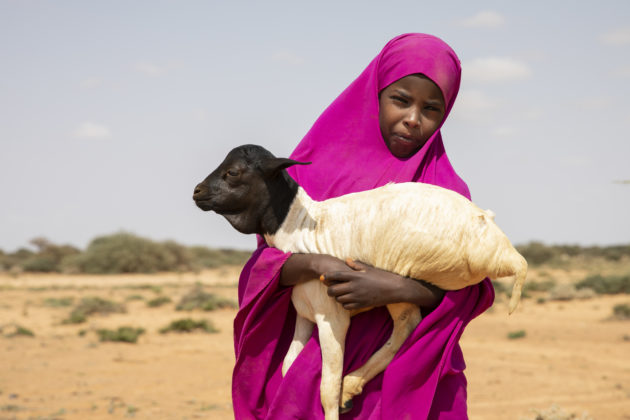
Deko*s family lived a nomadic pastoralist life before they were displaced and came to the village because of drought. They had a lot of animals (Her mother Anab doesn’t know exactly how many but they used to have goats, sheep and camels) and in a drought in 2018 she lost all but 20 goats and sheep.
Deko takes care of the goats and runs a lot to herd them. Sometimes she eats the fruits that grow in the pastures. She is described by her sister Amina* as a playful child who likes building miniature Somali traditional houses. Her best friend is Rahma* her older sister.
She likes eating injera (Somali pancake). In a day she’ll eat injera for breakfast, rice for lunch and spaghetti for dinner. She also likes somali tea, dates and juice. She likes to play football. In the future she wants to be a big girl.
When they first came to the village they couldn’t get food. They are in debt and can’t get credit – they used to get loans from the market to buy food and re-payed them in high season when they took the animals to market.
Save the Children provided Deko's mother Anab with a sack of rice, beans, wheat flour, cooking oil and milk at the beginning of July. Before, they were only able to have two meals per day. Now, since Save the Children has helped them, they have three meals a day. She says this is important as if you get weak here, other things can happen to you.
Anab says that daily life in the village is different to that in the countryside. Getting water is very expensive and to transport it you have to rent a car. Before she would use the camels to transport the water. Also there are no health facilities here, so if a child gets sick they have to go to the nearest town of Gardo. Also there are no toilets.
She hopes for a better future and to build a school and health facilities here. Her children don’t currently go to school but they go to the madrasa since they lived here.
Anab gets sad when she sees her children sick and she doesn’t have th
5 / 13
CH1384853
6 / 13
CH1384875
7 / 13
CH1384879
8 / 13
CH1414258
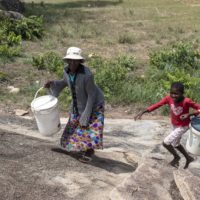
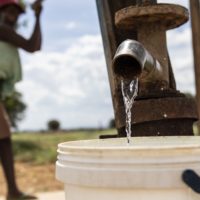
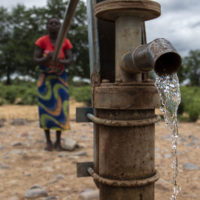
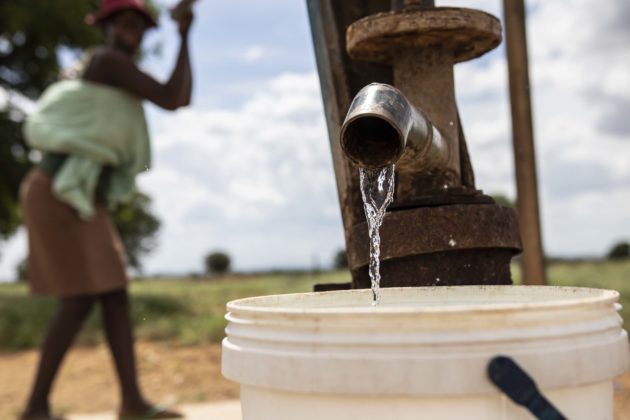
Pretty, 38, lives in southern Zimbabwe with her four children, including 12-year-old Nothando. The region has been hit with a severe drought and Pretty's crops have failed and food prices have skyrocketed. She has to walk 6km twice a day to collect water because the wells and rivers close to her home are dry.
Nothando says: "It is hot and there is no rain and no water. It troubles us as we fetch water from far away. Fetching water is painful because it takes a long time to fetch water.
"We don't eat in the same way we used to. Now things are expensive at the store. Food is expensive at the store and there's no rain and we fetch water from far away. I feel pain in my heart [when I think about it]."
Climate-related disasters, such as widespread drought and cyclones, are fuelling an unprecedented food crisis in Zimbabwe. Across the country 7.7 million children and adults are food insecure in urban and rural areas. Zimbabweans have been trying to adapt to the changing weather conditions by planting different crops and generating income from other sources such as selling honey and working as casual labourers.
However, as the crisis in Zimbabwe deepens – further economic downturn, the collapse of the construction industry, high unemployment and the decline in tourism – people are reaching breaking point. Countless hard-hit families are being forced to take desperate measures to survive such as reducing their daily meal intake, selling off livestock and other assets, working dangerous jobs, migrating to other countries and taking their children out of school to work.
Save the Children is supporting the most vulnerable families through its cash transfer project. Pretty receives $51 USD each month and she says the money has helped a lot and means she can buy food for her children and pay for their school fees.
Save the Children’s cash transfer project – Responding to Emergency Food Insecurity in Affected Communities in Zimbabwe (REACH) – is funded by th
9 / 13
CH1414330
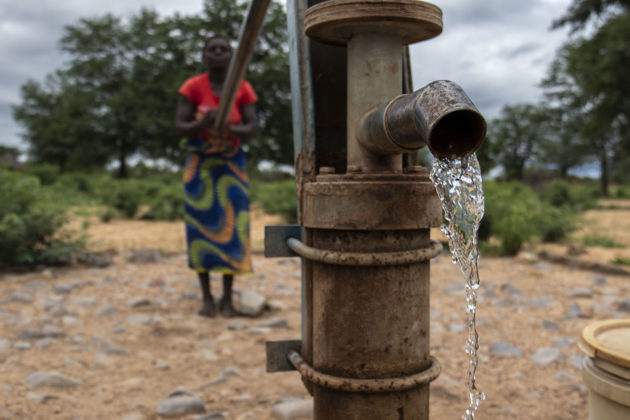
New mother, Moment, is from Zimbabwe and gave birth to her son Vitalis six weeks ago. She says her local health clinic does not provide the services it should, and they need better facilities to deliver babies and provide emergency care. Although deliveries are meant to be free in Zimbabwe, the clinic charged her RTGS 50 (USD $3*), which is a lot of money for Moment and her husband.
Moment and baby Vitalis are also severely impacted by the drought and food crisis in Zimbabwe, which is currently affecting 7.7 million children and adults across the country. Moment says sometimes she can only eat once a day and this limits her ability to produce breastmilk and to feed her son. Water is another big challenge because families in the community are limited to two buckets of water each a day and Moment says this is creating diarrhoea outbreaks.
Moment was part of an assessment conducted by Save the Children’s Emergency Health Unit. During the assessment, Moment and her community highlighted a number of issues.
The community said the drought means their crops have failed and they have very little to eat; food prices have skyrocketed; they are being forced to ration the water they pump from the boreholes because of the drought; they cannot afford to pay for healthcare; children and adults are migrating unsafely to South Africa to look for work; children are dropping out of school because their parents can no longer afford the school fees thus exposing them to exploitation; and families are resorting to marrying their young daughters to richer families so they have food to eat.
The Emergency Health Unit has deployed to Zimbabwe to conduct an assessment and set-up the emergency health, nutrition and water, sanitation and hygiene (WASH) programming to improve access to basic health and nutrition services and reduce the risk of disease outbreaks.
10 / 13
CH1420506
Juliet*, 30, is from Binga district in Zimbabwe where a severe drought and food crisis have gripped the region. She lives with her mother, sister and two children, her five-year-old son and 24-day-old daughter Maita*. Juliet’s first baby tragically died during labour.
Juliet says the changing climate and unpredictable rainfall are having a big impact on her family’s life. When the borehole runs dry they often have to drink dirty water, which gives them diarrhoea. And while they grow their own crops, delayed rains have meant they are going hungry because they haven’t been able to produce enough food.
The drought is also impacting on Juliet’s access to healthcare. Her local clinic has been forced to close the maternity unit because it no longer has a water supply due to low water levels and power cuts. Women are now referred to the district hospital to give birth. However, some women cannot afford to pay for the transport to the hospital and have no choice but to give birth at home.
When Juliet recently became pregnant with Maita, she was faced with an agonising situation. Juliet couldn't afford the transport cost to the hospital but was extremely stressed about giving birth at home because her first baby died. Luckily, baby Maita was born safely. Juliet is now saving as much money as possible so her pregnant sister Alice*, 19, can deliver at a hospital.
Juliet was part of an assessment conducted by Save the Children’s Emergency Health Unit in Binga district and six other districts in Zimbabwe in January and February 2020.
The Emergency Health Unit found that 50 percent of the health facilities assessed do not have a fully functioning water supply due to low water levels in the rivers, power cuts and poor infrastructure. The water shortages mean health workers often cannot provide children, pregnant women and new mothers with adequate healthcare or they have to refer them to another facility.
The assessment also found the severe drought has great
11 / 13
CH1420542
Loveness, 33, has four children including Move (six weeks) and Privilege (six). Loveness lives in Binga district in Zimbabwe where a severe drought and food crisis is having far-reaching consequences for her family.
While Loveness and her husband have multiple ways to generate an income including fishing, farming and weaving baskets, she says the changing climate and delayed rains have impacted on their crops and she doesn’t think she’ll have anything to harvest in April. They have reduced their meals to two per day, which consist of maize meal – the staple food in Zimbabwe – and okra. Her children forage for wild fruit in the mornings so they have something to eat.
The drought is also impacting on Loveness’ access to healthcare. Her local clinic has been forced to close its maternity unit because it no longer has a water supply due to low water levels and power cuts. Women are now referred to the district hospital to give birth. However, some women cannot afford to pay for the transport to the hospital and have no choice but to give birth at home.
When Loveness recently became pregnant with her fourth child, she was faced with an agonising situation. She couldn't afford the transport cost to the hospital but was terrified about giving birth at home. Loveness said she thought either herself or her baby would die.
Loveness was part of an assessment conducted by Save the Children’s Emergency Health Unit in Binga district and six other districts in Zimbabwe in January and February 2020.
The Emergency Health Unit found that 50 percent of the health facilities assessed do not have a fully functioning water supply due to low water levels in the rivers, power cuts and poor infrastructure. The water shortages mean health workers often cannot provide children, pregnant women and new mothers with adequate healthcare or they have to refer them to another facility.
The assessment also found the severe drought has greatly reduced safe water supplies in co
12 / 13
CH1444520
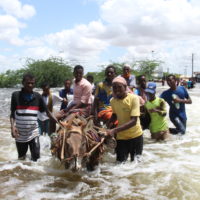
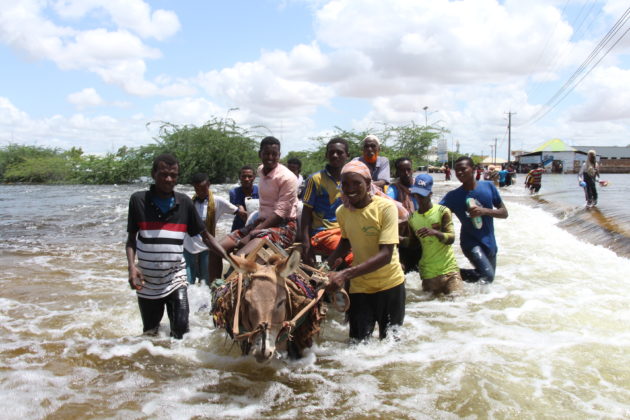
Thousands of people have been left displaced due to flooding in the worst-affected area of Beladwayne, Somalia.
Children and their families face severe hunger, health and protection risks in an area already battling with the COVID-19 pandemic.
13 / 13
CH1553750
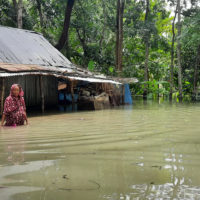
Cyclonic Storm ‘YAAS’ made landfall at West Bengal with a wind speed above 150 Km/h on 26th May early morning. The extended wind speeds above 120 km/h hit Bangladesh coast specfically Satkhira, Bhola, Patuakhali and Barguna districts.
Around 25,000 families at Satkhira, 17,000 families at Patukhali are severely affected by high tide although damage assessment will be carried out and actual damage information will be higher.
Save the Children has distributed Cash (BDT 3000 through MMT) and hygiene NFI to 700 families and shelter kits to 300 families under Early Action Protocol in Patuakhali and Bagerhat districts.
Community level early actions have been implemented such as EW message dissemination, evacuation people to cyclone shelter, prepare the 10 cyclone shelters and WASH points, re-excavation channel etc.
One emergency response team already have deployed to Satkhira from Dhaka. SCI field office and partners are collecting situation updates and damage information from field. Two teams are already in Bagerhat and Patuakhali districts and assessing the situation. In all areas SCI prepositioned partners are supporting to collect information.
GLI IMPEGNI INSUFFICIENTI – Il rapporto diffuso oggi da Save the Children, sviluppato con la partecipazione e le testimonianze di un gruppo di bambini tra i 12 e i 17 anni provenienti da Albania, Bangladesh, Cile, El Salvador, Guatemala, Kosovo, Norvegia, Somalia, Sri Lanka, Stati Uniti e Zambia, delinea le proporzioni devastanti dell’impatto della crisi climatica sui bambini se non ci sarà un’azione immediata. L’Organizzazione sottolinea infatti che gli impegni presi finora per la riduzione delle emissioni nel quadro dell’Accordo di Parigi determinerebbero un aumento della temperatura globale da 2,6 a 3,1 gradi Celsius al di sopra dei livelli preindustriali, con un impatto inaccettabile sui bambini. Come evidenziato nel rapporto, però, è ancora possibile invertire questo andamento. Se si riuscirà invece a limitare l’aumento della temperatura a 1,5 gradi come sancito dall’obbiettivo dell’Accordo di Parigi, l’esposizione aggiuntiva dei neonati attuali alle ondate di calore eccessivo diminuirà del 45%, del 39% per la siccità, del 38% per le inondazioni dei fiumi, del 28% per la perdita dei raccolti e del 10% per la devastazione degli incendi.
NESSUN LUOGO È SICURO – “Le recenti ondate di calore negli Stati Uniti e in Canada, gli incendi in Australia, le inondazioni in Europa e in Cina, le molteplici siccità che stanno causando crisi alimentari in luoghi come l’Afghanistan, il Madagascar e la Somalia, hanno chiaramente dimostrato che nessun luogo è sicuro” ha spiegato Inger Ashing, secondo cui “senza un’azione immediata, consegneremo un futuro mortale ai nostri figli. Dobbiamo eliminare la nostra dipendenza dai combustibili fossili, creare reti di sicurezza finanziaria per l’adattamento ai cambiamenti climatici e sostenere le comunità più colpite”.
Resta in contatto con la community de Il Fatto Quotidiano
Accedi o registrati per partecipare alla discussione
Gentile lettore, la pubblicazione dei commenti è sospesa dalle 20 alle 9, i commenti per ogni articolo saranno chiusi dopo 72 ore, il massimo di caratteri consentito per ogni messaggio è di 1.500 e ogni utente può postare al massimo 150 commenti alla settimana. Abbiamo deciso di impostare questi limiti per migliorare la qualità del dibattito. È necessario attenersi Termini e Condizioni di utilizzo del sito (in particolare punti 3 e 5): evitare gli insulti, le accuse senza fondamento e mantenersi in tema con la discussione. I commenti saranno pubblicati dopo essere stati letti e approvati, ad eccezione di quelli pubblicati dagli utenti in white list (vedere il punto 3 della nostra policy). Infine non è consentito accedere al servizio tramite account multipli. Vi preghiamo di segnalare eventuali problemi tecnici al nostro supporto tecnico
La Redazione
Caro navigatore, cara navigatrice,
non riesci a leggere ilfattoquotidiano.it perché hai negato i consensi relativi alla pubblicità. Per continuare a leggerci accetta i consensi o diventa nostro Sostenitore (in questo modo navigherai senza nessuna inserzione).
Ti ricordiamo che il nostro lavoro ha un costo ripagato dalla pubblicità e dai sostenitori. Il tuo aiuto è per noi indispensabile.
Se clicchi “Accetta i consensi” acconsenti in questo modo al trattamento dei tuoi dati personali mediante l'impiego di tutti i cookie presenti sul sito, fermo restando la possibilità di revocare il consenso in qualunque momento. Navigherai in modo totalmente gratuito e potrai visualizzare fino ad un massimo di 5 articoli al mese, e vedrai la pubblicità. Che cosa sono i cookie?
Se clicchi su “Rifiuta e Sostienici” sottoscrivi un abbonamento Sostenitore a “ilfattoquotidiano.it”, al costo promozionale di 1€ al mese per 3 mesi. A decorrere dal quarto mese il costo dell'abbonamento diverrà di 5,99€ al mese, il tutto mantenendo le tue attuali impostazioni. Da abbonato potrai navigare senza alcun tipo di pubblicità.
1 / 13
A boy looks out at the flooded street.
2 / 13
CH1356797
Deko* and Sadia* 's family lived a nomadic pastoralist life before they were displaced and came to the village because of drought. They had a lot of animals (Her mother Anab doesn’t know exactly how many but they used to have goats, sheep and camels) and in a drought in 2018 she lost all but 20 goats and sheep.
Deko takes care of the goats and runs a lot to herd them. Sometimes she eats the fruits that grow in the pastures. She is described by her sister Amina* as a playful child who likes building miniature Somali traditional houses. Her best friend is Rahma* her older sister.
She likes eating injera (Somali pancake). In a day she’ll eat injera for breakfast, rice for lunch and spaghetti for dinner. She also likes somali tea, dates and juice. She likes to play football. In the future she wants to be a big girl.
When they first came to the village they couldn’t get food. They are in debt and can’t get credit – they used to get loans from the market to buy food and re-payed them in high season when they took the animals to market.
Save the Children provided Deko's mother Anab with a sack of rice, beans, wheat flour, cooking oil and milk at the beginning of July. Before, they were only able to have two meals per day. Now, since Save the Children has helped them, they have three meals a day. She says this is important as if you get weak here, other things can happen to you.
Anab says that daily life in the village is different to that in the countryside. Getting water is very expensive and to transport it you have to rent a car. Before she would use the camels to transport the water. Also there are no health facilities here, so if a child gets sick they have to go to the nearest town of Gardo. Also there are no toilets.
She hopes for a better future and to build a school and health facilities here. Her children don’t currently go to school but they go to the madrasa since they lived here.
Anab gets sad when she sees her children sick and she doe
3 / 13
CH1356826
Amina*'s family lived a nomadic pastoralist life before they were displaced and came to the village because of drought. They had a lot of animals (Her mother Anab doesn’t know exactly how many but they used to have goats, sheep and camels) and in a drought in 2018 she lost all but 20 goats and sheep.
When they first came to the village they couldn’t get food. They are in debt and can’t get credit – they used to get loans from the market to buy food and re-payed them in high season when they took the animals to market.
Save the Children provided Amina* and Deko*'s mother Anab with a sack of rice, beans, wheat flour, cooking oil and milk at the beginning of July. Before, they were only able to have two meals per day. Now, since Save the Children has helped them, they have three meals a day. She says this is important as if you get weak here, other things can happen to you.
Anab says that daily life in the village is different to that in the countryside. Getting water is very expensive and to transport it you have to rent a car. Before she would use the camels to transport the water. Also there are no health facilities here, so if a child gets sick they have to go to the nearest town of Gardo. Also there are no toilets.
She hopes for a better future and to build a school and health facilities here. Her children don’t currently go to school but they go to the madrasa since they lived here.
Anab gets sad when she sees her children sick and she doesn’t have the ability to send them to hospital. Her husband (not photographed) is currently sick and she is not able to take him to hospital.
The family are trying to fatten up their remaining goats to take to market, but apart from that they have no other source of income.
4 / 13
CH1356867
Deko*s family lived a nomadic pastoralist life before they were displaced and came to the village because of drought. They had a lot of animals (Her mother Anab doesn’t know exactly how many but they used to have goats, sheep and camels) and in a drought in 2018 she lost all but 20 goats and sheep.
Deko takes care of the goats and runs a lot to herd them. Sometimes she eats the fruits that grow in the pastures. She is described by her sister Amina* as a playful child who likes building miniature Somali traditional houses. Her best friend is Rahma* her older sister.
She likes eating injera (Somali pancake). In a day she’ll eat injera for breakfast, rice for lunch and spaghetti for dinner. She also likes somali tea, dates and juice. She likes to play football. In the future she wants to be a big girl.
When they first came to the village they couldn’t get food. They are in debt and can’t get credit – they used to get loans from the market to buy food and re-payed them in high season when they took the animals to market.
Save the Children provided Deko's mother Anab with a sack of rice, beans, wheat flour, cooking oil and milk at the beginning of July. Before, they were only able to have two meals per day. Now, since Save the Children has helped them, they have three meals a day. She says this is important as if you get weak here, other things can happen to you.
Anab says that daily life in the village is different to that in the countryside. Getting water is very expensive and to transport it you have to rent a car. Before she would use the camels to transport the water. Also there are no health facilities here, so if a child gets sick they have to go to the nearest town of Gardo. Also there are no toilets.
She hopes for a better future and to build a school and health facilities here. Her children don’t currently go to school but they go to the madrasa since they lived here.
Anab gets sad when she sees her children sick and she doesn’t have th
5 / 13
CH1384853
6 / 13
CH1384875
7 / 13
CH1384879
8 / 13
CH1414258
Pretty, 38, lives in southern Zimbabwe with her four children, including 12-year-old Nothando. The region has been hit with a severe drought and Pretty's crops have failed and food prices have skyrocketed. She has to walk 6km twice a day to collect water because the wells and rivers close to her home are dry.
Nothando says: "It is hot and there is no rain and no water. It troubles us as we fetch water from far away. Fetching water is painful because it takes a long time to fetch water.
"We don't eat in the same way we used to. Now things are expensive at the store. Food is expensive at the store and there's no rain and we fetch water from far away. I feel pain in my heart [when I think about it]."
Climate-related disasters, such as widespread drought and cyclones, are fuelling an unprecedented food crisis in Zimbabwe. Across the country 7.7 million children and adults are food insecure in urban and rural areas. Zimbabweans have been trying to adapt to the changing weather conditions by planting different crops and generating income from other sources such as selling honey and working as casual labourers.
However, as the crisis in Zimbabwe deepens – further economic downturn, the collapse of the construction industry, high unemployment and the decline in tourism – people are reaching breaking point. Countless hard-hit families are being forced to take desperate measures to survive such as reducing their daily meal intake, selling off livestock and other assets, working dangerous jobs, migrating to other countries and taking their children out of school to work.
Save the Children is supporting the most vulnerable families through its cash transfer project. Pretty receives $51 USD each month and she says the money has helped a lot and means she can buy food for her children and pay for their school fees.
Save the Children’s cash transfer project – Responding to Emergency Food Insecurity in Affected Communities in Zimbabwe (REACH) – is funded by th
9 / 13
CH1414330
New mother, Moment, is from Zimbabwe and gave birth to her son Vitalis six weeks ago. She says her local health clinic does not provide the services it should, and they need better facilities to deliver babies and provide emergency care. Although deliveries are meant to be free in Zimbabwe, the clinic charged her RTGS 50 (USD $3*), which is a lot of money for Moment and her husband.
Moment and baby Vitalis are also severely impacted by the drought and food crisis in Zimbabwe, which is currently affecting 7.7 million children and adults across the country. Moment says sometimes she can only eat once a day and this limits her ability to produce breastmilk and to feed her son. Water is another big challenge because families in the community are limited to two buckets of water each a day and Moment says this is creating diarrhoea outbreaks.
Moment was part of an assessment conducted by Save the Children’s Emergency Health Unit. During the assessment, Moment and her community highlighted a number of issues.
The community said the drought means their crops have failed and they have very little to eat; food prices have skyrocketed; they are being forced to ration the water they pump from the boreholes because of the drought; they cannot afford to pay for healthcare; children and adults are migrating unsafely to South Africa to look for work; children are dropping out of school because their parents can no longer afford the school fees thus exposing them to exploitation; and families are resorting to marrying their young daughters to richer families so they have food to eat.
The Emergency Health Unit has deployed to Zimbabwe to conduct an assessment and set-up the emergency health, nutrition and water, sanitation and hygiene (WASH) programming to improve access to basic health and nutrition services and reduce the risk of disease outbreaks.
10 / 13
CH1420506
Juliet*, 30, is from Binga district in Zimbabwe where a severe drought and food crisis have gripped the region. She lives with her mother, sister and two children, her five-year-old son and 24-day-old daughter Maita*. Juliet’s first baby tragically died during labour.
Juliet says the changing climate and unpredictable rainfall are having a big impact on her family’s life. When the borehole runs dry they often have to drink dirty water, which gives them diarrhoea. And while they grow their own crops, delayed rains have meant they are going hungry because they haven’t been able to produce enough food.
The drought is also impacting on Juliet’s access to healthcare. Her local clinic has been forced to close the maternity unit because it no longer has a water supply due to low water levels and power cuts. Women are now referred to the district hospital to give birth. However, some women cannot afford to pay for the transport to the hospital and have no choice but to give birth at home.
When Juliet recently became pregnant with Maita, she was faced with an agonising situation. Juliet couldn't afford the transport cost to the hospital but was extremely stressed about giving birth at home because her first baby died. Luckily, baby Maita was born safely. Juliet is now saving as much money as possible so her pregnant sister Alice*, 19, can deliver at a hospital.
Juliet was part of an assessment conducted by Save the Children’s Emergency Health Unit in Binga district and six other districts in Zimbabwe in January and February 2020.
The Emergency Health Unit found that 50 percent of the health facilities assessed do not have a fully functioning water supply due to low water levels in the rivers, power cuts and poor infrastructure. The water shortages mean health workers often cannot provide children, pregnant women and new mothers with adequate healthcare or they have to refer them to another facility.
The assessment also found the severe drought has great
11 / 13
CH1420542
Loveness, 33, has four children including Move (six weeks) and Privilege (six). Loveness lives in Binga district in Zimbabwe where a severe drought and food crisis is having far-reaching consequences for her family.
While Loveness and her husband have multiple ways to generate an income including fishing, farming and weaving baskets, she says the changing climate and delayed rains have impacted on their crops and she doesn’t think she’ll have anything to harvest in April. They have reduced their meals to two per day, which consist of maize meal – the staple food in Zimbabwe – and okra. Her children forage for wild fruit in the mornings so they have something to eat.
The drought is also impacting on Loveness’ access to healthcare. Her local clinic has been forced to close its maternity unit because it no longer has a water supply due to low water levels and power cuts. Women are now referred to the district hospital to give birth. However, some women cannot afford to pay for the transport to the hospital and have no choice but to give birth at home.
When Loveness recently became pregnant with her fourth child, she was faced with an agonising situation. She couldn't afford the transport cost to the hospital but was terrified about giving birth at home. Loveness said she thought either herself or her baby would die.
Loveness was part of an assessment conducted by Save the Children’s Emergency Health Unit in Binga district and six other districts in Zimbabwe in January and February 2020.
The Emergency Health Unit found that 50 percent of the health facilities assessed do not have a fully functioning water supply due to low water levels in the rivers, power cuts and poor infrastructure. The water shortages mean health workers often cannot provide children, pregnant women and new mothers with adequate healthcare or they have to refer them to another facility.
The assessment also found the severe drought has greatly reduced safe water supplies in co
12 / 13
CH1444520
Thousands of people have been left displaced due to flooding in the worst-affected area of Beladwayne, Somalia.
Children and their families face severe hunger, health and protection risks in an area already battling with the COVID-19 pandemic.
13 / 13
CH1553750
Cyclonic Storm ‘YAAS’ made landfall at West Bengal with a wind speed above 150 Km/h on 26th May early morning. The extended wind speeds above 120 km/h hit Bangladesh coast specfically Satkhira, Bhola, Patuakhali and Barguna districts.
Around 25,000 families at Satkhira, 17,000 families at Patukhali are severely affected by high tide although damage assessment will be carried out and actual damage information will be higher.
Save the Children has distributed Cash (BDT 3000 through MMT) and hygiene NFI to 700 families and shelter kits to 300 families under Early Action Protocol in Patuakhali and Bagerhat districts.
Community level early actions have been implemented such as EW message dissemination, evacuation people to cyclone shelter, prepare the 10 cyclone shelters and WASH points, re-excavation channel etc.
One emergency response team already have deployed to Satkhira from Dhaka. SCI field office and partners are collecting situation updates and damage information from field. Two teams are already in Bagerhat and Patuakhali districts and assessing the situation. In all areas SCI prepositioned partners are supporting to collect information.
1 / 13
A boy looks out at the flooded street.
2 / 13
CH1356797
Deko* and Sadia* 's family lived a nomadic pastoralist life before they were displaced and came to the village because of drought. They had a lot of animals (Her mother Anab doesn’t know exactly how many but they used to have goats, sheep and camels) and in a drought in 2018 she lost all but 20 goats and sheep.
Deko takes care of the goats and runs a lot to herd them. Sometimes she eats the fruits that grow in the pastures. She is described by her sister Amina* as a playful child who likes building miniature Somali traditional houses. Her best friend is Rahma* her older sister.
She likes eating injera (Somali pancake). In a day she’ll eat injera for breakfast, rice for lunch and spaghetti for dinner. She also likes somali tea, dates and juice. She likes to play football. In the future she wants to be a big girl.
When they first came to the village they couldn’t get food. They are in debt and can’t get credit – they used to get loans from the market to buy food and re-payed them in high season when they took the animals to market.
Save the Children provided Deko's mother Anab with a sack of rice, beans, wheat flour, cooking oil and milk at the beginning of July. Before, they were only able to have two meals per day. Now, since Save the Children has helped them, they have three meals a day. She says this is important as if you get weak here, other things can happen to you.
Anab says that daily life in the village is different to that in the countryside. Getting water is very expensive and to transport it you have to rent a car. Before she would use the camels to transport the water. Also there are no health facilities here, so if a child gets sick they have to go to the nearest town of Gardo. Also there are no toilets.
She hopes for a better future and to build a school and health facilities here. Her children don’t currently go to school but they go to the madrasa since they lived here.
Anab gets sad when she sees her children sick and she doe
3 / 13
CH1356826
Amina*'s family lived a nomadic pastoralist life before they were displaced and came to the village because of drought. They had a lot of animals (Her mother Anab doesn’t know exactly how many but they used to have goats, sheep and camels) and in a drought in 2018 she lost all but 20 goats and sheep.
When they first came to the village they couldn’t get food. They are in debt and can’t get credit – they used to get loans from the market to buy food and re-payed them in high season when they took the animals to market.
Save the Children provided Amina* and Deko*'s mother Anab with a sack of rice, beans, wheat flour, cooking oil and milk at the beginning of July. Before, they were only able to have two meals per day. Now, since Save the Children has helped them, they have three meals a day. She says this is important as if you get weak here, other things can happen to you.
Anab says that daily life in the village is different to that in the countryside. Getting water is very expensive and to transport it you have to rent a car. Before she would use the camels to transport the water. Also there are no health facilities here, so if a child gets sick they have to go to the nearest town of Gardo. Also there are no toilets.
She hopes for a better future and to build a school and health facilities here. Her children don’t currently go to school but they go to the madrasa since they lived here.
Anab gets sad when she sees her children sick and she doesn’t have the ability to send them to hospital. Her husband (not photographed) is currently sick and she is not able to take him to hospital.
The family are trying to fatten up their remaining goats to take to market, but apart from that they have no other source of income.
4 / 13
CH1356867
Deko*s family lived a nomadic pastoralist life before they were displaced and came to the village because of drought. They had a lot of animals (Her mother Anab doesn’t know exactly how many but they used to have goats, sheep and camels) and in a drought in 2018 she lost all but 20 goats and sheep.
Deko takes care of the goats and runs a lot to herd them. Sometimes she eats the fruits that grow in the pastures. She is described by her sister Amina* as a playful child who likes building miniature Somali traditional houses. Her best friend is Rahma* her older sister.
She likes eating injera (Somali pancake). In a day she’ll eat injera for breakfast, rice for lunch and spaghetti for dinner. She also likes somali tea, dates and juice. She likes to play football. In the future she wants to be a big girl.
When they first came to the village they couldn’t get food. They are in debt and can’t get credit – they used to get loans from the market to buy food and re-payed them in high season when they took the animals to market.
Save the Children provided Deko's mother Anab with a sack of rice, beans, wheat flour, cooking oil and milk at the beginning of July. Before, they were only able to have two meals per day. Now, since Save the Children has helped them, they have three meals a day. She says this is important as if you get weak here, other things can happen to you.
Anab says that daily life in the village is different to that in the countryside. Getting water is very expensive and to transport it you have to rent a car. Before she would use the camels to transport the water. Also there are no health facilities here, so if a child gets sick they have to go to the nearest town of Gardo. Also there are no toilets.
She hopes for a better future and to build a school and health facilities here. Her children don’t currently go to school but they go to the madrasa since they lived here.
Anab gets sad when she sees her children sick and she doesn’t have th
5 / 13
CH1384853
6 / 13
CH1384875
7 / 13
CH1384879
8 / 13
CH1414258
Pretty, 38, lives in southern Zimbabwe with her four children, including 12-year-old Nothando. The region has been hit with a severe drought and Pretty's crops have failed and food prices have skyrocketed. She has to walk 6km twice a day to collect water because the wells and rivers close to her home are dry.
Nothando says: "It is hot and there is no rain and no water. It troubles us as we fetch water from far away. Fetching water is painful because it takes a long time to fetch water.
"We don't eat in the same way we used to. Now things are expensive at the store. Food is expensive at the store and there's no rain and we fetch water from far away. I feel pain in my heart [when I think about it]."
Climate-related disasters, such as widespread drought and cyclones, are fuelling an unprecedented food crisis in Zimbabwe. Across the country 7.7 million children and adults are food insecure in urban and rural areas. Zimbabweans have been trying to adapt to the changing weather conditions by planting different crops and generating income from other sources such as selling honey and working as casual labourers.
However, as the crisis in Zimbabwe deepens – further economic downturn, the collapse of the construction industry, high unemployment and the decline in tourism – people are reaching breaking point. Countless hard-hit families are being forced to take desperate measures to survive such as reducing their daily meal intake, selling off livestock and other assets, working dangerous jobs, migrating to other countries and taking their children out of school to work.
Save the Children is supporting the most vulnerable families through its cash transfer project. Pretty receives $51 USD each month and she says the money has helped a lot and means she can buy food for her children and pay for their school fees.
Save the Children’s cash transfer project – Responding to Emergency Food Insecurity in Affected Communities in Zimbabwe (REACH) – is funded by th
9 / 13
CH1414330
New mother, Moment, is from Zimbabwe and gave birth to her son Vitalis six weeks ago. She says her local health clinic does not provide the services it should, and they need better facilities to deliver babies and provide emergency care. Although deliveries are meant to be free in Zimbabwe, the clinic charged her RTGS 50 (USD $3*), which is a lot of money for Moment and her husband.
Moment and baby Vitalis are also severely impacted by the drought and food crisis in Zimbabwe, which is currently affecting 7.7 million children and adults across the country. Moment says sometimes she can only eat once a day and this limits her ability to produce breastmilk and to feed her son. Water is another big challenge because families in the community are limited to two buckets of water each a day and Moment says this is creating diarrhoea outbreaks.
Moment was part of an assessment conducted by Save the Children’s Emergency Health Unit. During the assessment, Moment and her community highlighted a number of issues.
The community said the drought means their crops have failed and they have very little to eat; food prices have skyrocketed; they are being forced to ration the water they pump from the boreholes because of the drought; they cannot afford to pay for healthcare; children and adults are migrating unsafely to South Africa to look for work; children are dropping out of school because their parents can no longer afford the school fees thus exposing them to exploitation; and families are resorting to marrying their young daughters to richer families so they have food to eat.
The Emergency Health Unit has deployed to Zimbabwe to conduct an assessment and set-up the emergency health, nutrition and water, sanitation and hygiene (WASH) programming to improve access to basic health and nutrition services and reduce the risk of disease outbreaks.
10 / 13
CH1420506
Juliet*, 30, is from Binga district in Zimbabwe where a severe drought and food crisis have gripped the region. She lives with her mother, sister and two children, her five-year-old son and 24-day-old daughter Maita*. Juliet’s first baby tragically died during labour.
Juliet says the changing climate and unpredictable rainfall are having a big impact on her family’s life. When the borehole runs dry they often have to drink dirty water, which gives them diarrhoea. And while they grow their own crops, delayed rains have meant they are going hungry because they haven’t been able to produce enough food.
The drought is also impacting on Juliet’s access to healthcare. Her local clinic has been forced to close the maternity unit because it no longer has a water supply due to low water levels and power cuts. Women are now referred to the district hospital to give birth. However, some women cannot afford to pay for the transport to the hospital and have no choice but to give birth at home.
When Juliet recently became pregnant with Maita, she was faced with an agonising situation. Juliet couldn't afford the transport cost to the hospital but was extremely stressed about giving birth at home because her first baby died. Luckily, baby Maita was born safely. Juliet is now saving as much money as possible so her pregnant sister Alice*, 19, can deliver at a hospital.
Juliet was part of an assessment conducted by Save the Children’s Emergency Health Unit in Binga district and six other districts in Zimbabwe in January and February 2020.
The Emergency Health Unit found that 50 percent of the health facilities assessed do not have a fully functioning water supply due to low water levels in the rivers, power cuts and poor infrastructure. The water shortages mean health workers often cannot provide children, pregnant women and new mothers with adequate healthcare or they have to refer them to another facility.
The assessment also found the severe drought has great
11 / 13
CH1420542
Loveness, 33, has four children including Move (six weeks) and Privilege (six). Loveness lives in Binga district in Zimbabwe where a severe drought and food crisis is having far-reaching consequences for her family.
While Loveness and her husband have multiple ways to generate an income including fishing, farming and weaving baskets, she says the changing climate and delayed rains have impacted on their crops and she doesn’t think she’ll have anything to harvest in April. They have reduced their meals to two per day, which consist of maize meal – the staple food in Zimbabwe – and okra. Her children forage for wild fruit in the mornings so they have something to eat.
The drought is also impacting on Loveness’ access to healthcare. Her local clinic has been forced to close its maternity unit because it no longer has a water supply due to low water levels and power cuts. Women are now referred to the district hospital to give birth. However, some women cannot afford to pay for the transport to the hospital and have no choice but to give birth at home.
When Loveness recently became pregnant with her fourth child, she was faced with an agonising situation. She couldn't afford the transport cost to the hospital but was terrified about giving birth at home. Loveness said she thought either herself or her baby would die.
Loveness was part of an assessment conducted by Save the Children’s Emergency Health Unit in Binga district and six other districts in Zimbabwe in January and February 2020.
The Emergency Health Unit found that 50 percent of the health facilities assessed do not have a fully functioning water supply due to low water levels in the rivers, power cuts and poor infrastructure. The water shortages mean health workers often cannot provide children, pregnant women and new mothers with adequate healthcare or they have to refer them to another facility.
The assessment also found the severe drought has greatly reduced safe water supplies in co
12 / 13
CH1444520
Thousands of people have been left displaced due to flooding in the worst-affected area of Beladwayne, Somalia.
Children and their families face severe hunger, health and protection risks in an area already battling with the COVID-19 pandemic.
13 / 13
CH1553750
Cyclonic Storm ‘YAAS’ made landfall at West Bengal with a wind speed above 150 Km/h on 26th May early morning. The extended wind speeds above 120 km/h hit Bangladesh coast specfically Satkhira, Bhola, Patuakhali and Barguna districts.
Around 25,000 families at Satkhira, 17,000 families at Patukhali are severely affected by high tide although damage assessment will be carried out and actual damage information will be higher.
Save the Children has distributed Cash (BDT 3000 through MMT) and hygiene NFI to 700 families and shelter kits to 300 families under Early Action Protocol in Patuakhali and Bagerhat districts.
Community level early actions have been implemented such as EW message dissemination, evacuation people to cyclone shelter, prepare the 10 cyclone shelters and WASH points, re-excavation channel etc.
One emergency response team already have deployed to Satkhira from Dhaka. SCI field office and partners are collecting situation updates and damage information from field. Two teams are already in Bagerhat and Patuakhali districts and assessing the situation. In all areas SCI prepositioned partners are supporting to collect information.
1 / 13
A boy looks out at the flooded street.
2 / 13
CH1356797
Deko* and Sadia* 's family lived a nomadic pastoralist life before they were displaced and came to the village because of drought. They had a lot of animals (Her mother Anab doesn’t know exactly how many but they used to have goats, sheep and camels) and in a drought in 2018 she lost all but 20 goats and sheep.
Deko takes care of the goats and runs a lot to herd them. Sometimes she eats the fruits that grow in the pastures. She is described by her sister Amina* as a playful child who likes building miniature Somali traditional houses. Her best friend is Rahma* her older sister.
She likes eating injera (Somali pancake). In a day she’ll eat injera for breakfast, rice for lunch and spaghetti for dinner. She also likes somali tea, dates and juice. She likes to play football. In the future she wants to be a big girl.
When they first came to the village they couldn’t get food. They are in debt and can’t get credit – they used to get loans from the market to buy food and re-payed them in high season when they took the animals to market.
Save the Children provided Deko's mother Anab with a sack of rice, beans, wheat flour, cooking oil and milk at the beginning of July. Before, they were only able to have two meals per day. Now, since Save the Children has helped them, they have three meals a day. She says this is important as if you get weak here, other things can happen to you.
Anab says that daily life in the village is different to that in the countryside. Getting water is very expensive and to transport it you have to rent a car. Before she would use the camels to transport the water. Also there are no health facilities here, so if a child gets sick they have to go to the nearest town of Gardo. Also there are no toilets.
She hopes for a better future and to build a school and health facilities here. Her children don’t currently go to school but they go to the madrasa since they lived here.
Anab gets sad when she sees her children sick and she doe
3 / 13
CH1356826
Amina*'s family lived a nomadic pastoralist life before they were displaced and came to the village because of drought. They had a lot of animals (Her mother Anab doesn’t know exactly how many but they used to have goats, sheep and camels) and in a drought in 2018 she lost all but 20 goats and sheep.
When they first came to the village they couldn’t get food. They are in debt and can’t get credit – they used to get loans from the market to buy food and re-payed them in high season when they took the animals to market.
Save the Children provided Amina* and Deko*'s mother Anab with a sack of rice, beans, wheat flour, cooking oil and milk at the beginning of July. Before, they were only able to have two meals per day. Now, since Save the Children has helped them, they have three meals a day. She says this is important as if you get weak here, other things can happen to you.
Anab says that daily life in the village is different to that in the countryside. Getting water is very expensive and to transport it you have to rent a car. Before she would use the camels to transport the water. Also there are no health facilities here, so if a child gets sick they have to go to the nearest town of Gardo. Also there are no toilets.
She hopes for a better future and to build a school and health facilities here. Her children don’t currently go to school but they go to the madrasa since they lived here.
Anab gets sad when she sees her children sick and she doesn’t have the ability to send them to hospital. Her husband (not photographed) is currently sick and she is not able to take him to hospital.
The family are trying to fatten up their remaining goats to take to market, but apart from that they have no other source of income.
4 / 13
CH1356867
Deko*s family lived a nomadic pastoralist life before they were displaced and came to the village because of drought. They had a lot of animals (Her mother Anab doesn’t know exactly how many but they used to have goats, sheep and camels) and in a drought in 2018 she lost all but 20 goats and sheep.
Deko takes care of the goats and runs a lot to herd them. Sometimes she eats the fruits that grow in the pastures. She is described by her sister Amina* as a playful child who likes building miniature Somali traditional houses. Her best friend is Rahma* her older sister.
She likes eating injera (Somali pancake). In a day she’ll eat injera for breakfast, rice for lunch and spaghetti for dinner. She also likes somali tea, dates and juice. She likes to play football. In the future she wants to be a big girl.
When they first came to the village they couldn’t get food. They are in debt and can’t get credit – they used to get loans from the market to buy food and re-payed them in high season when they took the animals to market.
Save the Children provided Deko's mother Anab with a sack of rice, beans, wheat flour, cooking oil and milk at the beginning of July. Before, they were only able to have two meals per day. Now, since Save the Children has helped them, they have three meals a day. She says this is important as if you get weak here, other things can happen to you.
Anab says that daily life in the village is different to that in the countryside. Getting water is very expensive and to transport it you have to rent a car. Before she would use the camels to transport the water. Also there are no health facilities here, so if a child gets sick they have to go to the nearest town of Gardo. Also there are no toilets.
She hopes for a better future and to build a school and health facilities here. Her children don’t currently go to school but they go to the madrasa since they lived here.
Anab gets sad when she sees her children sick and she doesn’t have th
5 / 13
CH1384853
6 / 13
CH1384875
7 / 13
CH1384879
8 / 13
CH1414258
Pretty, 38, lives in southern Zimbabwe with her four children, including 12-year-old Nothando. The region has been hit with a severe drought and Pretty's crops have failed and food prices have skyrocketed. She has to walk 6km twice a day to collect water because the wells and rivers close to her home are dry.
Nothando says: "It is hot and there is no rain and no water. It troubles us as we fetch water from far away. Fetching water is painful because it takes a long time to fetch water.
"We don't eat in the same way we used to. Now things are expensive at the store. Food is expensive at the store and there's no rain and we fetch water from far away. I feel pain in my heart [when I think about it]."
Climate-related disasters, such as widespread drought and cyclones, are fuelling an unprecedented food crisis in Zimbabwe. Across the country 7.7 million children and adults are food insecure in urban and rural areas. Zimbabweans have been trying to adapt to the changing weather conditions by planting different crops and generating income from other sources such as selling honey and working as casual labourers.
However, as the crisis in Zimbabwe deepens – further economic downturn, the collapse of the construction industry, high unemployment and the decline in tourism – people are reaching breaking point. Countless hard-hit families are being forced to take desperate measures to survive such as reducing their daily meal intake, selling off livestock and other assets, working dangerous jobs, migrating to other countries and taking their children out of school to work.
Save the Children is supporting the most vulnerable families through its cash transfer project. Pretty receives $51 USD each month and she says the money has helped a lot and means she can buy food for her children and pay for their school fees.
Save the Children’s cash transfer project – Responding to Emergency Food Insecurity in Affected Communities in Zimbabwe (REACH) – is funded by th
9 / 13
CH1414330
New mother, Moment, is from Zimbabwe and gave birth to her son Vitalis six weeks ago. She says her local health clinic does not provide the services it should, and they need better facilities to deliver babies and provide emergency care. Although deliveries are meant to be free in Zimbabwe, the clinic charged her RTGS 50 (USD $3*), which is a lot of money for Moment and her husband.
Moment and baby Vitalis are also severely impacted by the drought and food crisis in Zimbabwe, which is currently affecting 7.7 million children and adults across the country. Moment says sometimes she can only eat once a day and this limits her ability to produce breastmilk and to feed her son. Water is another big challenge because families in the community are limited to two buckets of water each a day and Moment says this is creating diarrhoea outbreaks.
Moment was part of an assessment conducted by Save the Children’s Emergency Health Unit. During the assessment, Moment and her community highlighted a number of issues.
The community said the drought means their crops have failed and they have very little to eat; food prices have skyrocketed; they are being forced to ration the water they pump from the boreholes because of the drought; they cannot afford to pay for healthcare; children and adults are migrating unsafely to South Africa to look for work; children are dropping out of school because their parents can no longer afford the school fees thus exposing them to exploitation; and families are resorting to marrying their young daughters to richer families so they have food to eat.
The Emergency Health Unit has deployed to Zimbabwe to conduct an assessment and set-up the emergency health, nutrition and water, sanitation and hygiene (WASH) programming to improve access to basic health and nutrition services and reduce the risk of disease outbreaks.
10 / 13
CH1420506
Juliet*, 30, is from Binga district in Zimbabwe where a severe drought and food crisis have gripped the region. She lives with her mother, sister and two children, her five-year-old son and 24-day-old daughter Maita*. Juliet’s first baby tragically died during labour.
Juliet says the changing climate and unpredictable rainfall are having a big impact on her family’s life. When the borehole runs dry they often have to drink dirty water, which gives them diarrhoea. And while they grow their own crops, delayed rains have meant they are going hungry because they haven’t been able to produce enough food.
The drought is also impacting on Juliet’s access to healthcare. Her local clinic has been forced to close the maternity unit because it no longer has a water supply due to low water levels and power cuts. Women are now referred to the district hospital to give birth. However, some women cannot afford to pay for the transport to the hospital and have no choice but to give birth at home.
When Juliet recently became pregnant with Maita, she was faced with an agonising situation. Juliet couldn't afford the transport cost to the hospital but was extremely stressed about giving birth at home because her first baby died. Luckily, baby Maita was born safely. Juliet is now saving as much money as possible so her pregnant sister Alice*, 19, can deliver at a hospital.
Juliet was part of an assessment conducted by Save the Children’s Emergency Health Unit in Binga district and six other districts in Zimbabwe in January and February 2020.
The Emergency Health Unit found that 50 percent of the health facilities assessed do not have a fully functioning water supply due to low water levels in the rivers, power cuts and poor infrastructure. The water shortages mean health workers often cannot provide children, pregnant women and new mothers with adequate healthcare or they have to refer them to another facility.
The assessment also found the severe drought has great
11 / 13
CH1420542
Loveness, 33, has four children including Move (six weeks) and Privilege (six). Loveness lives in Binga district in Zimbabwe where a severe drought and food crisis is having far-reaching consequences for her family.
While Loveness and her husband have multiple ways to generate an income including fishing, farming and weaving baskets, she says the changing climate and delayed rains have impacted on their crops and she doesn’t think she’ll have anything to harvest in April. They have reduced their meals to two per day, which consist of maize meal – the staple food in Zimbabwe – and okra. Her children forage for wild fruit in the mornings so they have something to eat.
The drought is also impacting on Loveness’ access to healthcare. Her local clinic has been forced to close its maternity unit because it no longer has a water supply due to low water levels and power cuts. Women are now referred to the district hospital to give birth. However, some women cannot afford to pay for the transport to the hospital and have no choice but to give birth at home.
When Loveness recently became pregnant with her fourth child, she was faced with an agonising situation. She couldn't afford the transport cost to the hospital but was terrified about giving birth at home. Loveness said she thought either herself or her baby would die.
Loveness was part of an assessment conducted by Save the Children’s Emergency Health Unit in Binga district and six other districts in Zimbabwe in January and February 2020.
The Emergency Health Unit found that 50 percent of the health facilities assessed do not have a fully functioning water supply due to low water levels in the rivers, power cuts and poor infrastructure. The water shortages mean health workers often cannot provide children, pregnant women and new mothers with adequate healthcare or they have to refer them to another facility.
The assessment also found the severe drought has greatly reduced safe water supplies in co
12 / 13
CH1444520
Thousands of people have been left displaced due to flooding in the worst-affected area of Beladwayne, Somalia.
Children and their families face severe hunger, health and protection risks in an area already battling with the COVID-19 pandemic.
13 / 13
CH1553750
Cyclonic Storm ‘YAAS’ made landfall at West Bengal with a wind speed above 150 Km/h on 26th May early morning. The extended wind speeds above 120 km/h hit Bangladesh coast specfically Satkhira, Bhola, Patuakhali and Barguna districts.
Around 25,000 families at Satkhira, 17,000 families at Patukhali are severely affected by high tide although damage assessment will be carried out and actual damage information will be higher.
Save the Children has distributed Cash (BDT 3000 through MMT) and hygiene NFI to 700 families and shelter kits to 300 families under Early Action Protocol in Patuakhali and Bagerhat districts.
Community level early actions have been implemented such as EW message dissemination, evacuation people to cyclone shelter, prepare the 10 cyclone shelters and WASH points, re-excavation channel etc.
One emergency response team already have deployed to Satkhira from Dhaka. SCI field office and partners are collecting situation updates and damage information from field. Two teams are already in Bagerhat and Patuakhali districts and assessing the situation. In all areas SCI prepositioned partners are supporting to collect information.
In Edicola
Quest'articolo è riservato agli abbonati Partner
Abbonati a Il Fatto Quotidiano:per te c'è un'offerta annuale a soli 99,99€ (tutti i contenuti digitali del quotidiano + sito) oppure diventa Sostenitore (tutti i contenuti del sito + alcuni articoli del quotidiano in regalo)
Digital
Partner
Sfoglia ogni giorno i contenuti di FQ IN EDICOLA sul tuo pc e sulla nuova app.