

Human rights experts: extrajudicial sanctions against six European citizens undermine fundamental rights
 Commenti



They are meant to be a badge of shame, but they are actually much more than that. The sanctions imposed on six citizens of the European Union and other European nations, including Switzerland, not only jeopardize the personal lives of these six individuals – who are journalists or geopolitical commentators – but, according to human rights experts consulted by our newspaper, they risk jeopardizing the fundamental rights of all Europeans, rights that took centuries to secure, such as freedom of opinion, freedom of movement, the presumption of innocence, and the right not to be punished without a fair trial.
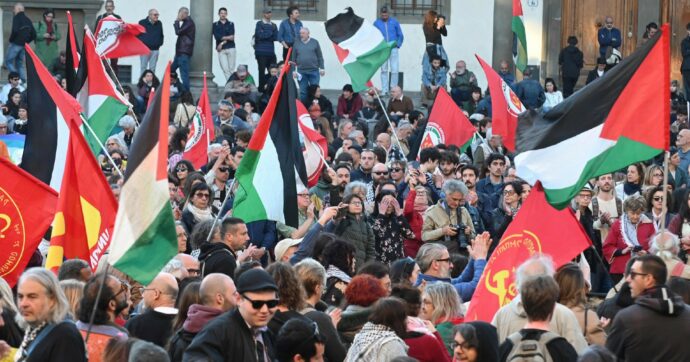
It is a German journalist of Turkish origin, Hüseyin Dogru, who has brought the case to the public’s attention in recent weeks. Last May, the Council of the European Union hit Dogru with sanctions for his journalism. He is accused, among other things, of disseminating images of a violent occupation of a German university by pro-Palestinian protesters “which included the use of Hamas symbols”, as the authorities state in their sanctions, concluding that Dogru’s journalism contributed to an operation to destabilize the European Union for the benefit of Russia.
Dogru and five other Europeans have been targeted by the sanctions packages formulated against Russia’s alleged hybrid warfare. Former Swiss colonel Jacques Baud has been sanctioned as well, accused of spreading Russian propaganda through his analyses, for example on the Ukraine war. In an interview with Il Fatto Quotidiano, Dogru spoke of his despair at being unable to work, travel, or receive financial assistance from anyone (read our interview with Mr Dogru).
“The frightening thing is that, today, a European national can be summarily sentenced to social death by the EU for peacefully expressing views on critical contemporary issues because they differ from those of the EU”, Christophe Peschoux tells “Il Fatto Quotidiano”, adding: “The EU is re-establishing the crime of opinion“. A former senior human rights officer at the United Nations, Peschoux now puts his human rights expertise at the disposal of the Geneva International Peace Research Institute (GIPRI), which has sent an official protest to the Council of the European Union calling on it “to rescind those decisions”.
The Council merely replied to GIPRI that the measures are temporary, that those affected may ask their respective national governments for access to the frozen funds in order to meet their basic needs, and that they may appeal to the Court of Justice of the European Union. No response was given to GIPRI relative to the fundamental freedoms affected, nor to the fact that such penalties are applied without first holding a trial in which the accused can enjoy the presumption of innocence and defend themselves.
Icelandic human rights lawyer Sunna Ævarsdóttir, head of the Courage Foundation — which has supported such high-profile whistleblowers as Edward Snowden — explains to Il Fatto Quotidiano that these sanctions reverse the burden of proof: European citizens have the right not to be punished for anything unless they have been convicted by a court in a fair trial, wherein it is the government that bears the burden of proving the charges, not the citizens who are required to prove their innocence.
“Without this, you cannot say that you have a state that fully functions on the rule of law, which is a fundamental tenet of any democratic society”, Sunna Ævarsdóttir says, adding: “What makes this so concerning is that it is up to these people to disprove that they committed these acts that the European Union is accusing them off, after they have been punished”.
Il Fatto Quotidiano posed several questions to the Council of the European Union, which merely provided a response similar to that given to GIPRI. Specifically, we asked for clarification on the Council’s statement: “Sanctions are not punitive and instead seek to bring about a change in the policy or conduct of those targeted, with a view to promoting the objectives of the EU’s Common Foreign and Security Policy”. We asked the Council: is it acceptable for the European Union, which supposedly promotes freedom of the press, to target journalists so they will align with the European Union’s objectives?” The Council did not answer this question.
ITALIAN VERSION – Pro-Pal e anti-Nato sanzionati dall’Ue: “Reato d’opinione”