




Italy’s 2027 Budget Law: Investing in human-specific research means investing in the future





 Commenti
by Francesca Pistollato, PhD, Senior Program Director, Biomedical Science, Humane World for Animals
One of the most promising transformations in modern biomedicine — the shift towards animal-free research increasingly grounded in human biology — is at risk of being overlooked in discussions of Italy’s 2027 Budget Law.
Italy is already at a disadvantage. In 2024, the country invested approximately 1.38% of its GDP in research and development, compared with an EU average of 2.24%. There is also a less visible gap: investment in innovative, human-specific approaches to studying diseases and assessing the safety of medicines and chemicals.
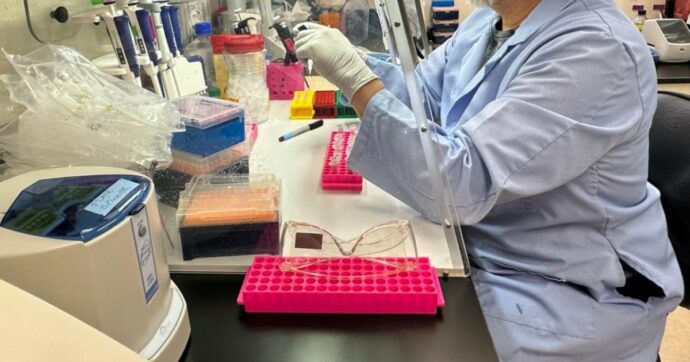
These New Approach Methodologies (NAMs) include organoids and three-dimensional models derived from human cells, organs-on-chips and microphysiological systems, computational methods and artificial intelligence. This is not simply about developing “alternatives” to animal experimentation. The ambition is much greater: to build models that are more relevant to disease prevention, diagnosis, drug development, and toxicity assessment.
Italy has talented researchers and centers of excellence, but it lacks an adequate, sustained national investment strategy. Among the funding initiatives dedicated to developing and validating alternative methods, the Italian Ministry of Health reports an annual allocation of €2 million for the 2020–2022 period: this amounts to just €6 million in total and has not been renewed for more than five years.
To understand the scale of this disparity, we need only look beyond Italy’s borders. The Netherlands’ national centre for animal-free research has a budget of €245 million for 2025–2034, including €124.5 million from the Dutch National Growth Fund. The program supports infrastructure, validation and adoption, training, and technology transfer into industry and regulatory practice.
In the United Kingdom, the government committed an additional £75 million in 2026 to accelerate the development and adoption of non-animal methods, including plans for a national validation hub.
In the United States, the scale of investment is even more striking. In March 2026, the National Institutes of Health announced more than $150 million for a program dedicated to the development, standardization, validation and implementation of human biology-based NAMs. Rather than funding isolated projects, the initiative encompasses technology development centers, a data and coordination hub, and a network for validation and qualification.
This is the crucial point: funding innovation must go beyond distributing small, one-off grants, and towards building an ecosystem capable of supporting new technologies from early-stage research through validation to their effective adoption.
In June 2026, the European Commission adopted its Roadmap towards phasing out animal testing in chemical safety assessments, with specific actions and deadlines set. In addition, the European Research Area Policy Agenda 2025–2027 includes a dedicated action to accelerate NAMs in biomedical research and the testing of pharmaceuticals and medical devices.
Italy’s 2027 Budget Law could mark a turning point by establishing a Multiannual National Program for Human-Specific Research and NAMs, supported by stable, predictable funding rather than occasional allocations. An initial investment of €100 million over five years — €20 million annually — while modest in comparison, would allow Italy to move beyond small-scale funding towards a coherent national strategy.
The proposed €20 million annual budget could support four strategic pillars: €8 million for competitive research and development projects, particularly human-specific models for disease research and toxicology; €6 million for shared infrastructure and platforms, making non-animal technologies such as organoids, organs-on-chips, biobanks and advanced computational tools; €4 million for validation, standardization and qualification — essential steps in transforming promising methods into reliable tools; and €2 million for education, training and skills development of the next generation of researchers and professionals in the field.
Moreover, if developed in coordination with European initiatives, this investment could leverage national resources to strengthen Italy’s participation in EU research programs and attract additional funding.
The rationale extends well beyond animal protection. This is a matter of scientific and industrial policy: making Italian research more competitive, attracting talent and investment, fostering new technologies and businesses, and ensuring that Italian researchers are equipped to compete at European and international levels.
Italy already possesses the scientific expertise needed to contribute to this transformation. What is missing is the political commitment to invest in it systematically. The 2027 Budget Law offers an opportunity to establish a national policy to advance human-specific research. Investing in models that are more relevant to human biology is not only about reducing the use of animals: it is about increasing the likelihood that every euro invested generates knowledge that can genuinely improve human health.